One Owner Used Vehicles: What Buyers Should Verify Before Purchase
One owner used vehicles can look appealing when you want a clear starting point for your research. A single recorded owner may make the vehicle’s history easier to follow, but it cannot tell you by itself how the car was driven, maintained, or cared for. If you are shopping in Fredericksburg or elsewhere in Northern Virginia, use ownership history as one clue, then verify the records and the vehicle in front of you.
A careful review helps you separate a useful history from a reassuring-sounding label. Ask focused questions, compare the paperwork with the vehicle, and take the time you need before deciding.
Browse used vehicles in Fredericksburg
Why consider one owner used vehicles?
Ownership count is a useful starting point because it can give you a simple outline of a vehicle’s past. A car with one recorded owner may have fewer changes of hands to trace than one that has had several owners. That can make it easier to ask who drove it, where it was used, and whether service records are available.
Still, one owner does not automatically mean low wear, perfect maintenance, or trouble-free driving. A vehicle might have been driven every day on I-95, used for frequent long trips, or kept mostly for short errands. Those uses can create different kinds of wear, and the owner count does not explain which pattern applies.
Likewise, multiple owners are not proof that a vehicle is a poor choice. Owners may have changed because of a move, a growing family, a lease ending, or a change in transportation needs. The important question is whether the available history, current condition, and asking terms make sense together.
Treat the phrase “one owner” as a reason to ask better questions, not as a promise about condition. A useful decision comes from looking at the whole picture: ownership history, maintenance information, title status, visible wear, and how the vehicle performs during a careful test drive.
Also ask what “one owner” means in the listing or report. Some records count ownership changes in a particular way, and a prior lease or business use may not be obvious from a short label. Do not assume the count tells you whether the vehicle was used by one person every day or shared among several drivers. Ask the seller to explain the history in plain language, then compare that explanation with the documents available for that car.
Think about your own use, too. A car that spent much of its time in stop-and-go traffic may have different wear than one driven mainly on open roads, but an owner count will not tell you which applies. Specific records and a current review can help you understand what questions to ask next.
What can a vehicle history report tell you?
A history report can be a helpful research tool, but it is not a complete record of every event in a vehicle’s life. Its information depends on what was reported to the data providers. Use it to identify questions and patterns, then ask for supporting documents when they are available.
Depending on the report, you may see recorded title events, registration or ownership changes, reported damage, or service entries. Read the report line by line rather than jumping to its summary label. Check whether the dates and mileage entries appear to progress in a sensible order, and note any gaps you want explained.
A clean-looking report does not establish that a car has never been damaged or that every service was completed. Not every shop visit, repair, or incident is necessarily captured. A report also cannot replace looking at the vehicle, reviewing available maintenance paperwork, or asking a qualified professional to assess a concern.
The Federal Trade Commission explains that a dealer’s Buyers Guide is a separate document that tells shoppers important information about a used car, including whether it is being sold with a warranty or “as is” where permitted. Review the guide on the specific vehicle and get any important promises in writing. The FTC’s used-car dealer buying guide also recommends reviewing the Buyers Guide and understanding the warranty terms before you buy.
For another overview of what a Buyers Guide covers, see the FTC’s Dealer’s Guide to the Used Car Rule. These sources explain the federal guide and dealer rule; they do not verify the history or condition of a particular car. Ask the seller to help you match each document to the vehicle you are considering.
How do you verify maintenance and ownership details?
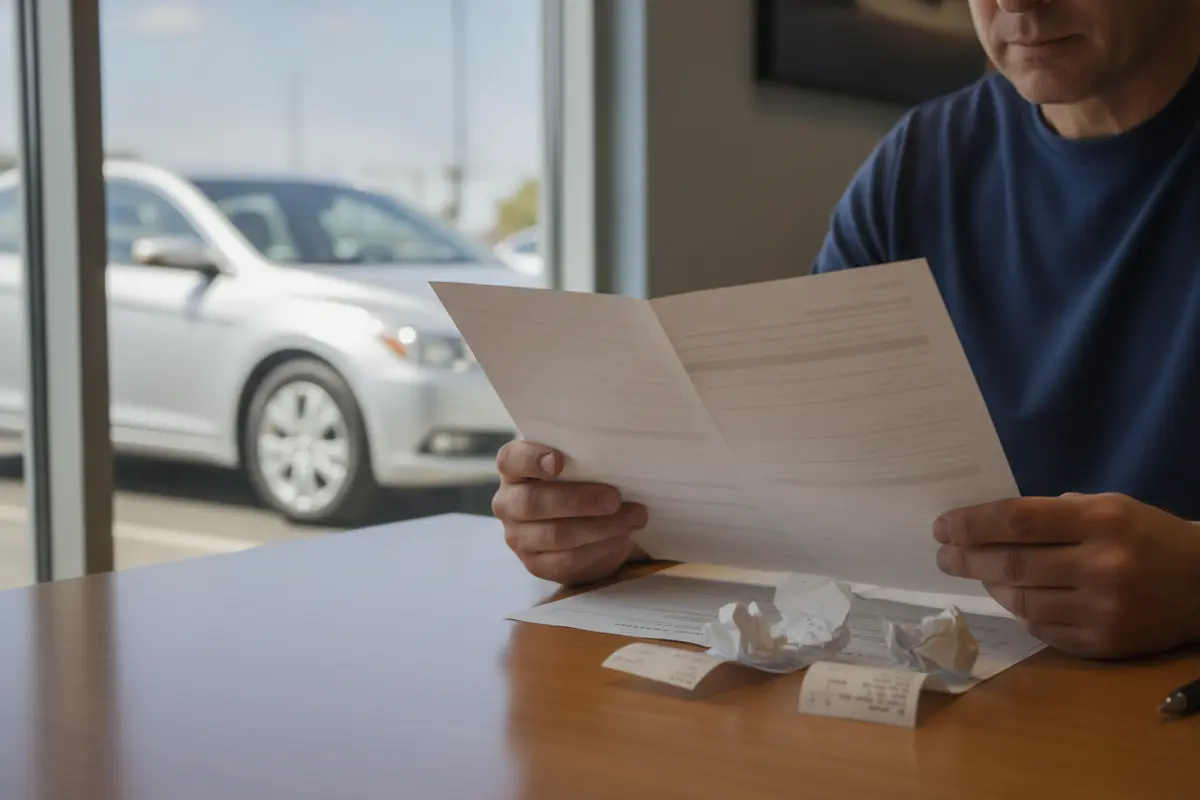
Begin with specific, open questions. Ask what records are available, who maintained the vehicle, and whether the seller can explain any long periods without documented service. You are not looking for a perfect paper trail at any cost. You are looking for information that is consistent and clear enough to support an informed decision.
- Match identifying details. Compare the vehicle identification number (VIN) on the vehicle with the VIN on the history report, title documents, and any service paperwork you review.
- Review dates and mileage. Put service or inspection entries in date order. Look for mileage that moves forward consistently, and ask about entries that seem out of sequence or leave a large unexplained gap.
- Ask what a record means. A receipt may show that work was performed, but it may not explain the full condition of a part or the quality of a repair. Ask for clarification rather than assuming more than the document says.
- Separate documented work from verbal statements. If a specific repair or included item matters to your decision, request written confirmation and keep a copy with your purchase documents.
- Check whether the seller’s explanation fits. Compare the explanation with the dates, mileage, paperwork, and visible condition. If something does not line up, ask follow-up questions before you move forward.
Ownership records may use terms that are easy to misread. A report’s owner count is based on its data and definitions, so ask what the label represents and whether the available title or registration paperwork supports the history described. The number of registered owners also does not identify every person who may have driven the car.
For a local buyer, paperwork can come from several places, especially if the vehicle previously lived outside Virginia. Keep the report and records together, and write down questions as you go. A transparent seller should be willing to discuss what is known and what cannot be confirmed.
If two records appear to conflict, do not guess which one is right. Note the exact detail, such as a date, mileage entry, or description, and ask the seller to explain the difference. A correction or additional document may clear it up. If the explanation does not resolve your concern, consider getting professional guidance before you make a decision.
Give yourself a clear stopping point: unresolved questions about the title, a mismatch in the VIN, or a condition concern you cannot assess are reasons to pause rather than rush through paperwork. You can continue once you understand the issue well enough to decide how it affects your budget and comfort.
How should you check the vehicle’s current condition?
Use your own observations alongside the paperwork. Look at the vehicle in good light and take your time. Check that the exterior panels, lights, glass, tires, seats, and controls appear consistent with the vehicle’s age and the description you received. No single mark determines whether a car is right for you, but a pattern of wear or a warning light deserves an explanation.
During a test drive, pay attention to how the car starts, accelerates, brakes, steers, and shifts. Try the features you expect to use, including climate controls, windows, screens, and driver-assistance features if equipped. Choose a route that gives you a safe chance to drive at different speeds and make ordinary turns and stops. If a sound, vibration, smell, or warning indicator concerns you, pause and ask about it.
Ask what inspection steps the dealer performs and whether any findings or repair records can be shared. Auto Fanatics emphasizes meticulous vehicle inspections, but you should still ask about the specific vehicle and any issue that matters to you. An inspection is a snapshot, not a guarantee that a used vehicle will never need repairs.
You may also choose to arrange an independent inspection by a qualified mechanic before purchase. Discuss the scope and timing with the seller first, and ask the mechanic to explain findings in plain language. If access to an independent review is not available, consider what that means for your comfort level rather than treating it as proof for or against the car.
If you have time, inspect the car both before and after the drive. Before starting, look for obvious warning lights, tire damage, cracked glass, or interior features that do not work as expected. During the drive, focus on normal behavior rather than trying to diagnose a mechanical issue yourself. Afterward, note any new warning light, smell, or change you noticed. Share observations with the seller and ask what steps are available to answer the concern.
It can help to bring another adult who can listen, take notes, and ask questions you might overlook. Use a short checklist on your phone or paper so that each vehicle gets the same review. If you compare several options on different days, consistent notes make it easier to remember which concerns were confirmed, which were answered, and which remain open.
Use this simple comparison to keep different types of evidence in perspective:
| What you review | What it can help show | What it cannot prove alone | Useful next step |
|---|---|---|---|
| Ownership and history report | Recorded events and entries available to the report provider | Every repair, incident, or driver in the vehicle’s past | Confirm the VIN and ask about gaps or unclear entries |
| Service paperwork | Work listed on receipts or maintenance records | That every recommended service was completed or that no issue remains | Compare dates and mileage, and ask for explanations |
| Walk-around and test drive | Visible condition and how the vehicle behaves during your drive | Internal condition or future reliability | Document questions and request further review where needed |
| Independent mechanic review | A qualified professional’s observations at that time | That future repairs will not be needed | Review findings and decide which items affect your budget |
Keep the categories separate. A clean appearance cannot fill a gap in maintenance records, and a complete set of receipts cannot tell you how the car feels on the road today. The strongest picture comes from comparing multiple kinds of evidence.
Which title and purchase details should you confirm?
Before you agree to buy, review the title and the sale documents carefully. Confirm that the VIN matches the vehicle and other paperwork. Ask about any title brand or status shown in the records, and make sure you understand what it means for the particular vehicle. If a document is unclear, request an explanation before signing.
Read the Buyers Guide displayed for that specific car. It states whether the vehicle is offered with a warranty or without one, where applicable, and may identify other terms. Do not assume that a verbal description replaces what is written in the sale documents. Ask for all terms that matter to you to be recorded in writing.
Request an itemized explanation of the purchase price and any additional charges or products you are considering. If you are comparing monthly payments, also compare the total amount financed, the length of the loan, and the overall cost under the offered terms. A lower payment can result from a longer term, so look beyond that one number.
Before signing, read each document from beginning to end and ask about any blank, unclear, or different information. Check that the vehicle description and VIN match the car you reviewed. Take a copy of the documents with you and save it where you can refer to it later. If a term is important to your decision, make sure it appears in the written agreement rather than relying only on a conversation.
If you are considering a vehicle protection plan, read its coverage, exclusions, deductible, and claim process before deciding whether it fits your needs. Auto Fanatics lists vehicle protection plan options; ask for the actual terms that would apply to the vehicle and plan you are considering. Do not treat a plan as a substitute for understanding the car’s present condition.
How can Fredericksburg-area shoppers compare options?
Shopping across Fredericksburg, Spotsylvania, Stafford, Culpeper, Woodbridge, and King George can involve different commutes, budgets, and daily needs. A car that works for a short local trip may not feel the same on a regular I-95 commute. Think about your typical passengers, cargo, parking, fuel needs, and how many miles you expect to drive before you compare specific vehicles.
Set a budget that includes more than the listed price. Consider the payment terms, insurance, fuel, taxes and registration, and a reserve for routine ownership costs. You do not need to predict every repair. You do want to know how much room remains in your budget after the purchase and whether a vehicle with a different price or equipment level makes more sense.
When reviewing financing, compare the full written terms rather than choosing only by the monthly amount. Auto Fanatics offers Capital One pre-qualification, which can help you explore financing before selecting a vehicle; ask what information is needed and what the next step involves. Review the terms that actually apply to your situation, since approval, rates, and payment amounts depend on the lender’s decision and the details of the transaction. Keep your vehicle budget and loan decision connected, but evaluate each on its own merits.
For a practical visit, save the listing details and your questions before you travel from Stafford, Culpeper, Woodbridge, or another nearby community. Confirm availability, identify the paperwork you want to review, and leave enough time to look at the car and test drive it without rushing. That preparation makes the trip more useful even if you decide the vehicle is not the right fit.
Compare candidates using the same checklist. For each one, record the year, mileage, price, available service records, condition questions, title details, and the result of your drive. That makes it easier to weigh a one-owner vehicle against another option without allowing the owner count to dominate the decision.
- Choose your must-haves. List the features and space you need for your commute, household, and regular errands.
- Compare similar vehicles. Look at vehicles with broadly similar size, age, mileage, and equipment before drawing conclusions from price alone.
- Check current availability. Inventory changes, so confirm that the vehicle you want to review is still available before making a trip.
- Bring your questions. Ask about ownership information, available maintenance documentation, inspection steps, title status, and written sale terms.
- Take time to decide. A no-pressure buying experience gives you room to compare information and make a decision that suits your needs.
Auto Fanatics serves shoppers in the Fredericksburg area and highlights a no-pressure approach, meticulous inspections, and more than 500 five-star reviews. You can read customer testimonials as one source of context about the buying experience, while keeping your own vehicle checks and questions specific to the car you are considering.
If you need a different body style, compare the available used SUVs or used trucks as well as sedans. The goal is to find a vehicle that fits how you drive, not simply the one with the most appealing history label.
Explore current used-car inventory
Frequently Asked Questions
Does one owner mean a used car is in better condition?
No. It tells you something about recorded ownership, but not how the vehicle was driven, maintained, or stored. Review the available records, inspect the vehicle, and ask questions about anything you cannot verify.
Can a vehicle history report confirm that a car has never been damaged?
Not by itself. A report can show information that was recorded and made available to its provider, but it may not include every incident or repair. Use it with service documents, a careful review of the vehicle, and a qualified professional’s assessment when appropriate.
What if maintenance records are missing?
Missing records do not automatically mean the vehicle was neglected, but they leave some details unconfirmed. Ask whether other documentation is available, look for consistency between the car and the information provided, and factor the unknowns into your decision.
Should I have a mechanic review a one-owner vehicle?
You may choose an independent review if you want another professional’s perspective before buying. Discuss access and timing with the seller, and use the findings to ask specific questions. No inspection can promise that a used vehicle will not need future repairs.
What matters more, owner count or maintenance history?
Neither should be viewed alone. Owner count offers context, while maintenance records may document some of the work completed. Compare both with the current condition, title information, test drive, and written purchase terms.
One-owner history can help you ask more focused questions, but it is only one part of a careful used-car decision. Verify what you can, clarify what you cannot, and choose the vehicle that fits your needs and budget with confidence.