Used Cars With Heated Seats: Buyer Checklist
Table of Contents
- Confirm Heated Seats Are on the Exact Vehicle
- How Do You Test Heated Seats During a Used-Car Test Drive?
- Check for Even Heat, Slow Response, or a Cold Spot
- What Should You Check on the Upholstery and Seat Surface?
- How Do Heated Seats Work With Climate Controls and Remote Start?
- Compare Winter Comfort Beyond the Heated-Seat Button
- Frequently Asked Questions
- Which used cars have heated seats?
- Are heated seats worth having?
- How can I test heated seats on a used car?
- What if a heated seat warms unevenly or only partly?
- Ready to Compare Used Cars With Heated Seats?
A heated seat can make the start of a winter drive more comfortable. But a button or dashboard icon alone does not confirm that the feature is fitted or working. If you are comparing vehicles in Fredericksburg or elsewhere in Northern Virginia, check the equipment on the exact car and try the controls during your test drive. Availability and control layouts can differ across model years and trims, so general model information is only a starting point.
When comparing used cars with heated seats, confirm the feature on the specific vehicle because equipment can vary by year and trim. Then test each equipped seat for normal operation.
Start by matching the listing to the car in front of you, then check what the controls, seat surface, and warmth can tell you before making a decision.
Confirm Heated Seats Are on the Exact Vehicle
Heated seats are not standard across every year or trim of a model. Equipment can also differ with factory options, packages, and the vehicle's original configuration. So when you search for used cars with heated seats, treat a model name or a broad feature list as a starting point, not confirmation that the specific car has the feature.
Begin with the listing for the exact vehicle. Look for heated seats in its equipment details, and check which seating positions are included. A listing may identify front-seat heaters without indicating whether the rear seats are equipped. If the details are unclear, ask the seller to confirm the equipment on that vehicle rather than relying on a similar car's listing or a general model description.
Then compare the vehicle's year and trim with its owner's manual. The manual can help you confirm whether heated seats apply to that configuration and show where the controls should be. Feature availability can vary by vehicle and grade, as Toyota's feature guidance notes. Use the manual that matches the vehicle, since control layouts and available equipment may differ between years and versions.
Before you make a decision, match the listing to what you can see in the car. Look for the seat-heater symbol on a physical switch or in the climate-control screen, and ask to confirm that it operates during a test drive. The presence of a button alone is not proof that every seat is equipped or that the system works. Those are separate checks for the exact vehicle.
If you are comparing options in Fredericksburg or elsewhere in Northern Virginia, verify each car individually. Do not assume a particular brand or model always includes this comfort feature. Auto Fanatics describes its vehicles as receiving a multi-point inspection, but that does not establish that heated-seat operation is specifically checked. Ask what inspection records are available and personally confirm the feature. You can browse used car inventory, then review the equipment details for any vehicle that fits your needs.
How Do You Test Heated Seats During a Used-Car Test Drive?
Build a quick seat-heater check into your normal test drive instead of relying on a switch lighting up. A working indicator is useful, but you also want to confirm that the equipped seats respond and feel comfortable. Inspection checklists recommend testing heated-seat controls and each equipped position, but this is buyer guidance, not a certification of any vehicle or dealership inspection. See the full test drive a used car guide for other checks to make while you are behind the wheel.
Check the vehicle's required power state. Some seat heaters operate only when the engine is running, while requirements vary by vehicle. Start the vehicle as directed by its owner's manual before deciding a control is unresponsive. Keep the vehicle parked while you locate the controls.
Find the control for each seat. Look for a heated-seat button near the seat or climate controls, or check the touchscreen's climate menu. If the symbol or menu is not obvious, consult the exact vehicle manual rather than guessing which control activates the heater. Front and rear seating equipment can differ.
Cycle through the available settings. Press the control through each mode, then switch it off. Watch for an indicator light or a setting shown on the display each time. The number of settings and how they appear vary. Confirm the display changes as expected, but do not treat the indicator alone as proof that the seat is warming.
Test every equipped position. Check the driver's seat, front passenger seat, and any heated rear seats. Do not assume one working seat means the others work. A technician inspection checklist also calls for checking front and rear positions when equipped.
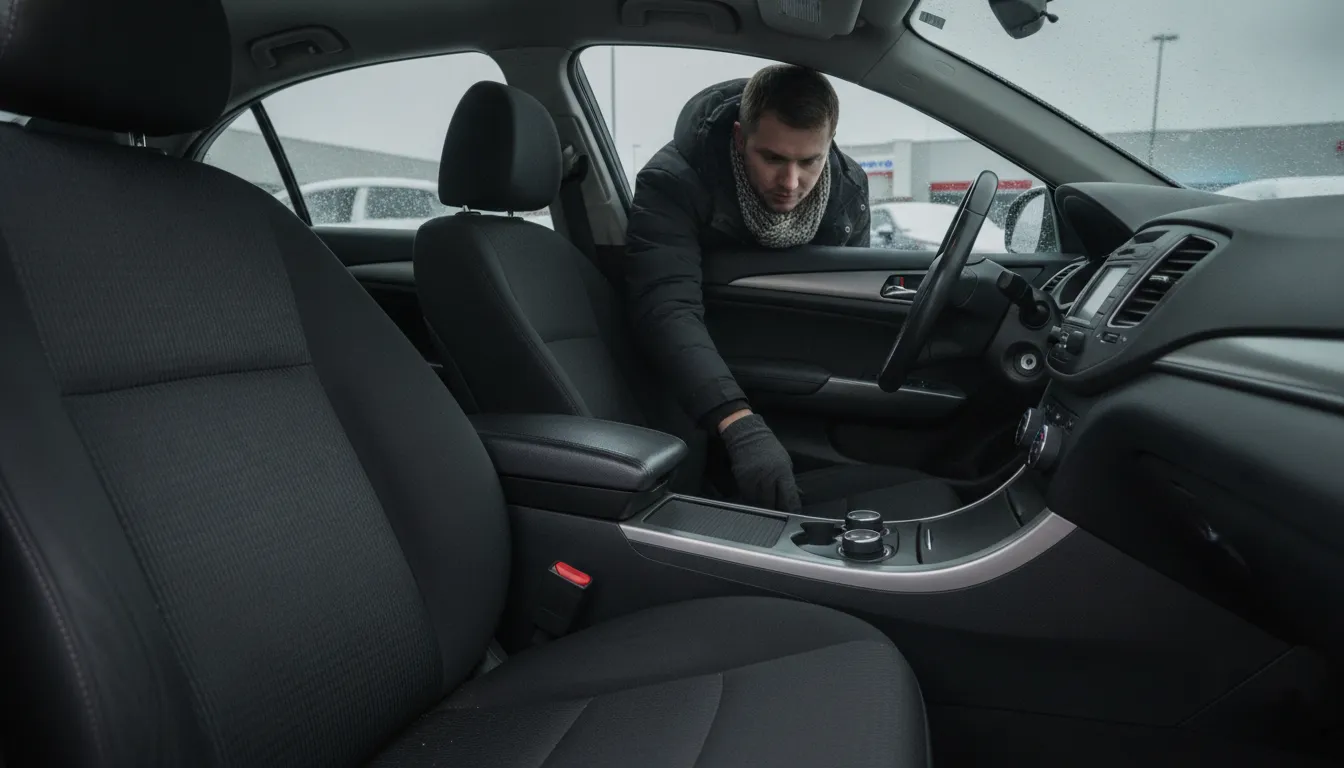
Give each seat a reasonable chance to warm. Leave the selected setting on while you complete the rest of the parked checks or begin the drive, then notice whether the seat becomes warmer. There is no universal warm-up time to apply to every vehicle. If you cannot tell, allow more time when practical and compare with another equipped seat.
Compare the cushion and back, then note differences. Pay attention to whether warmth is noticeable across the seat rather than judging from one small spot. If one position or area feels substantially different, record what you observed and ask the seller about it. A broader used car interior inspection can help you assess the rest of the cabin, but unusual heater behavior may need vehicle-specific follow-up.
For reference, NHTSA-hosted inspection checklists recommend checking switches and heated seats when equipped, including the front and rear where applicable: inspection checklist. Use the owner's manual for the exact vehicle to confirm its controls and operating requirements.
| Check | Observe |
|---|---|
| Controls | Indicator and warmth |
| Equipped seats | Normal response |
| Cushion, back | Consistent warmth |
Check for Even Heat, Slow Response, or a Cold Spot
Once the controls are on, notice where warmth develops. Check whether it feels consistent. Depending on the seat design, the cushion and back may use separate heater sections, so check each area rather than judging the whole seat from one warm spot. A service bulletin for certain GM vehicles describes the back and cushion as distinct sections for diagnostic purposes. That is a model-specific example, not a rule for every vehicle (GM service bulletin hosted by NHTSA).
During the test drive, pay attention to whether one side of the seat warms while another stays noticeably cold. Note if warmth is patchy or slow compared with another equipped seat. If both front seats have the feature, compare their general response, but do not expect every model or setting to feel identical. Heat level, seat construction, cabin conditions, and control design vary.
- Check the cushion and back separately, including the areas where you sit and lean.
- Notice whether warmth spreads consistently or a distinct area remains cold.
- If another seat is equipped, compare its operation without assuming it should feel exactly the same.
- Try the control again as described in the vehicle's owner's manual if the response is unclear.
A slow or uneven response is a reason to ask questions, not to guess at the cause. One GM bulletin discusses a concern that could appear during a first cold start and change after the system warms. But its guidance applies to specific vehicles and directs technicians to use current manufacturer service information. It does not establish that a cold spot or slow response is normal across makes and models.
If a section does not warm, the heat is inconsistent, or you cannot confirm that the system works as expected. Ask whether the seller has service records or knows of prior seat-heater work. Request a professional evaluation before relying on the feature. A technician can assess the exact vehicle using its service information; a quick test drive cannot identify which part, if any, needs attention.
What Should You Check on the Upholstery and Seat Surface?
Look over the entire seat before testing its heater. Check the center panels, side bolsters, seams, and places where you get in and out for tears, punctures, deep cracks, loose stitching, or areas that look recently repaired. Note stains, dampness, unusual odors, or upholstery that feels different from the rest of the seat. These are reasons to ask questions and inspect further, not proof that the heater is damaged or working.
Pay attention to changes that may hide the original surface, such as a fitted cover, replacement upholstery, or a cushion that does not sit flat. Ask whether a cover or upholstery work was added and whether the owner has records. A puncture can damage a heating element in some seats. And a vehicle-specific owner manual may warn against using the heater on a wet seat or placing insulating material over it. Follow the exact vehicle's manual rather than applying one manufacturer's instructions to every car.

Ford's owner manual guidance, for example, cautions about wet seats, punctures, and insulating items. The details can differ by model and year. If the surface is damp, damaged, or covered. Do not assume it is safe to switch the heater on until you have checked that vehicle's instructions and clarified the seat's condition.
Use the heater cautiously if you or a passenger has reduced ability to feel heat or pain. A published medical case report describes a burn involving a seat warmer and notes greater concern for people with impaired sensation. This is a documented safety concern, not a measure of how often such injuries occur. Check the setting, use only as directed, and stop if the seat feels unusually hot or uncomfortable. Take extra care with children or anyone who may not notice or communicate excessive heat.
Appearance alone cannot confirm the heater's condition. A clean, intact seat may still need an operating test, while visible wear does not automatically mean the heating system has failed. Combine the surface check with the control and warmth tests, and ask for a qualified evaluation if you find damage or have concerns.
How Do Heated Seats Work With Climate Controls and Remote Start?
Heated-seat controls may be physical switches near the climate controls or options inside a touchscreen climate menu. Some systems show a setting indicator or let you choose among heat levels, while others use a different layout. For example, Toyota describes rocker switches below the climate controls, and Ford manuals document touchscreen-based controls in some vehicles. These are examples, not a guide to every model. Check the controls and operating instructions for the exact vehicle you are considering.
Remote start and startup behavior can vary too. Depending on the vehicle and its settings, a heated seat may resume a previous setting, turn on during remote start, or remain off. Some systems also shut off after a set period, and some only operate when the engine is running. Those behaviors are not automatically signs of a fault. Look up the vehicle's year, make, model, and trim in its owner's manual, then follow the instructions for its specific system.
During a test drive, try the seat controls both from the climate menu and any physical switches, if equipped. Confirm that the setting indicator responds, and ask the seller to explain what should happen during remote start and after restarting the vehicle. If the seat turns off or does not respond as expected, compare what you observe with the manual before drawing conclusions.
If you have questions about a seat's operation or history, ask:
- Has anyone reported a problem with this seat heater or its controls?
- Were any related repairs performed, and are service records available?
- Are there warning lights or messages connected to the seat or climate system?
- Is there an open safety recall for this vehicle?
For a safety-recall check, enter the vehicle identification number (VIN) at NHTSA's recall lookup. A VIN search can help identify recalls listed for that vehicle, but it does not diagnose a seat-heater concern or confirm that a repair has been completed. If something still seems unclear, ask for the available records and have a qualified service professional evaluate the concern. A manual, a test drive, and documented repair history give you a more useful basis for deciding whether the controls behave as expected.
Compare Winter Comfort Beyond the Heated-Seat Button
A heated seat can be useful, but comfort depends on more than whether a button lights up. As you compare vehicles for driving around Fredericksburg, Stafford, Spotsylvania, Culpeper, or elsewhere in Northern Virginia. Consider how the seat fits you and how the whole cabin feels during a test drive. Your daily route, passengers, clothing, and personal comfort preferences all matter.
Start with the basics: Does the seat support you comfortably? Can you adjust it to a position that feels natural? Check the upholstery for wear or damage, and try the available heat settings on each equipped seat. If you regularly carry a passenger, confirm whether that seat has its own controls and whether its operation feels as expected. Do not assume two vehicles, or even two trims of the same model, have the same equipment.
Think about other controls and conveniences you will use alongside seat heat, such as the climate system, seat adjustment, and visibility from the driver's position. A feature can be appealing on paper but less useful if the seat itself is uncomfortable or the controls are confusing. Use your test drive to decide what matters most to you, rather than treating one comfort feature as a substitute for evaluating the vehicle overall.
Auto Fanatics says its vehicles undergo a thorough multi-point inspection. That does not, by itself, confirm that a particular seat heater, switch, or climate-control connection was tested. Personally check the feature on the exact vehicle and ask what its inspection records say. If anything feels inconsistent, ask questions before deciding, and take the time you need to compare.
Our buying process is intended to be transparent and no-pressure, so you can focus on whether a vehicle fits your needs. Auto Fanatics reports more than 500 five-star reviews; you can read customer testimonials to see feedback from other buyers.
Browse Auto Fanatics' used-car inventory
When you find a vehicle worth a closer look, verify its listed equipment and ask about any details that are not clear. Comparing comfort in person, with the specific vehicle in front of you, is the best way to decide whether its features and fit work for your routine.
Frequently Asked Questions
Which used cars have heated seats?
Heated seats are available on some vehicles, but equipment can differ by model year, trim, and options package. Check the listing and equipment details for the exact car, then confirm the controls and instructions in its owner's manual. A model name alone does not confirm that a particular vehicle has the feature. Toyota likewise notes that features vary by vehicle and grade: Toyota's feature guidance.
Are heated seats worth having?
They may be worthwhile if you value extra seat comfort on chilly drives and expect to use the feature. If you rarely feel cold, prefer other comfort features, or find heated seats uncomfortable, they may not matter much to you. Consider your routine and test the seat's fit, controls, and warmth before making it a deciding factor.
How can I test heated seats on a used car?
Check the specific owner's manual first, since the vehicle may need to be running and the controls differ. Turn on each equipped seat, confirm the indicator or display responds, cycle through the settings, and give the seat time to warm. Test each available seating position rather than assuming the passenger or rear seat works because the driver's seat does. A vehicle inspection checklist also recommends checking heated-seat operation when equipped: NHTSA-hosted inspection guidance.
What if a heated seat warms unevenly or only partly?
Compare the cushion and backrest, and check whether the warmth is consistent when you repeat the test. Some systems have separate heated sections, but designs vary, so a cold spot does not identify a specific fault by itself. Ask about prior repairs or service records and have an unexplained difference evaluated by a qualified technician before treating the feature as fully functional.
Ready to Compare Used Cars With Heated Seats?
As you narrow your choices, check the equipment details for the specific vehicle and test the seats during your visit. We take a no-pressure approach, so you can ask questions and decide what feels right for your needs. Browse Auto Fanatics' used inventory to get started, then confirm heated-seat availability and operation on the vehicle you are considering before arranging a test drive.